
Hotels tend to describe their rooms rather briefly. A king room and a mini suite may be almost identical on a booking page.
The difference is typically the layout and not the bed. One is a single open room. The other has some sort of separation, and almost invariably a sitting area. That one change has an impact on the way the stay feels.
The following is a guide to what is typically included in each room type. It provides details on who they are best for and the additional expense and what it actually provides. It also has an interesting list of questions that should be asked before any booking is made.
What Each Room Type Usually Includes
Start with the basics, because the names themselves give very little away. Hotels do vary a little, but the general pattern holds almost everywhere.
A king room is one open room with a king bed in it. There is normally a small table, a chair or two, and a dresser. The bathroom sits off to one side. Everything happens in the same space, which keeps it simple and tidy. Many travellers find that perfectly sufficient.
Hotels use plenty of other names as well. Junior suite, studio suite, and executive room all turn up. Those names mean different things in different places. Always read the room description rather than trusting the label.
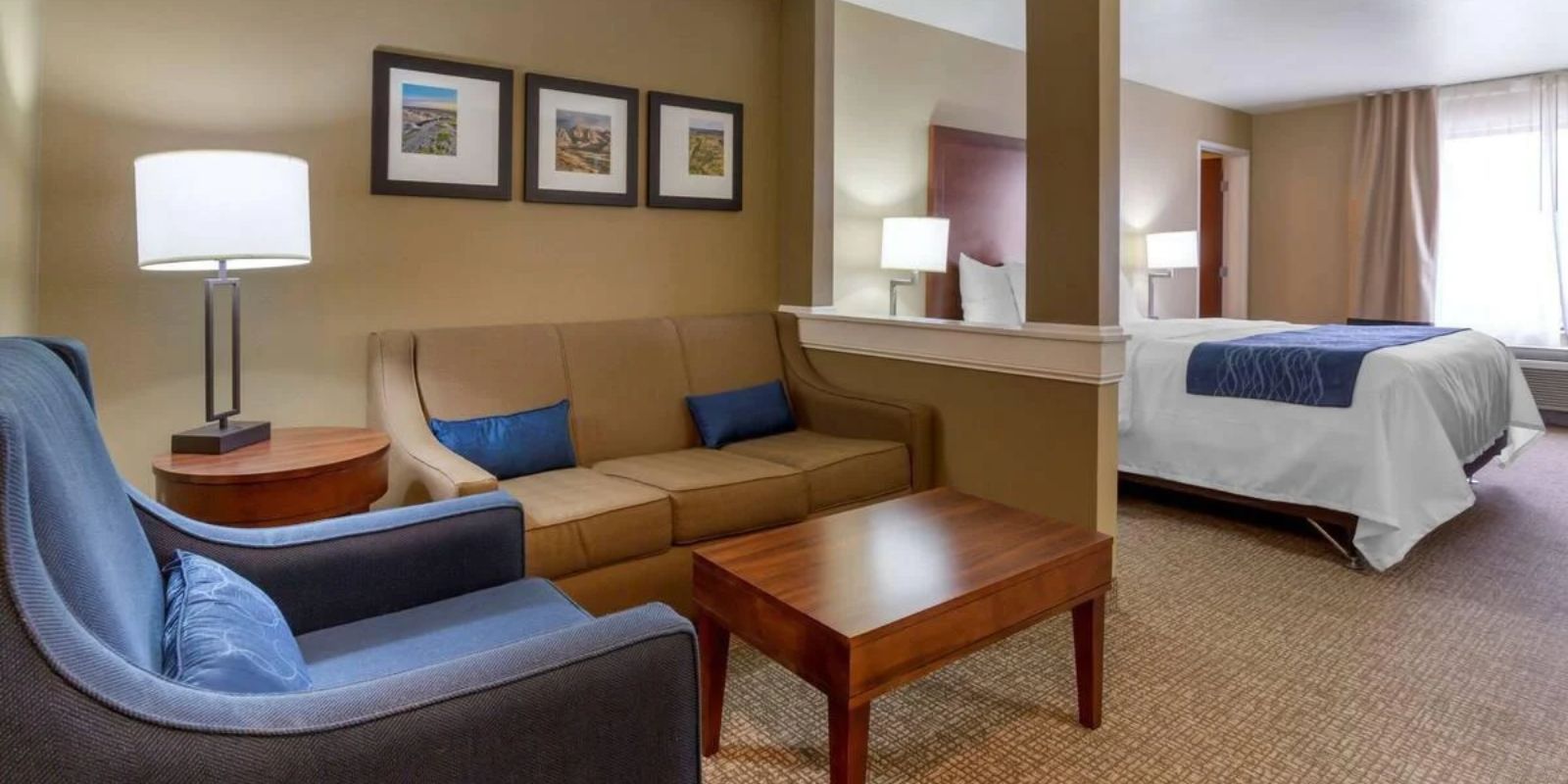
A mini suite is larger, and it is divided in some way. Sometimes there is a half wall or an archway. Sometimes it is a separate sitting area at one end. There is usually a sofa, a proper table, and often a small kitchenette. The bed still sits in the main space, so it is not a full suite. A full suite has a door between the bedroom and the living room.
How Much Space Do You Really Need?
This is the question that settles it for most people. Be honest about how you will use the room, and for how long.
Two people staying two nights rarely need a separate sitting area. The bed, the bathroom, and somewhere to put a suitcase will do. Most of the day is spent out of the room anyway. A king room is perfectly comfortable for that, and it costs a good deal less.
Longer stays change the picture entirely. After three or four nights, living in one room starts to wear on people. Suitcases spread out, and there is nowhere at all to sit that is not the bed. A mini suite gives you somewhere to put things, and somewhere to sit properly.
Business travellers often feel this sooner. Working from the bed is uncomfortable after the very first evening. A proper table and chair make a real difference on a work trip.
Travelling With Children or a Third Person
Extra people are easily the most common reason to book up to a mini suite. The sofa is really what makes the difference here.
A sofa bed suits one child very well, or a teenager for a few nights. Two small children often manage fine on it together. Check the hotel’s own limit on guests per room before counting on it. An adult will usually find it less comfortable than a proper bed. For a long stay, two rooms may genuinely work out better.
There is a quieter advantage too. With a sitting area, one person can stay up while another sleeps. Parents of young children know exactly how useful that is. A lamp in the corner is far easier than sitting in the dark. The same applies to anybody travelling with somebody who keeps different hours.
Sofa Beds Are Worth Asking About
Not all sofa beds are equal, and the listing rarely tells you much. A couple of questions will save you a surprise.
Ask what size it actually is. A twin sofa bed suits one person, and a queen will take two. Ask whether the hotel makes it up before you arrive. Some do, and some leave the linen in a cupboard for you. Making it up yourself at midnight is nobody’s idea of a holiday.
Ask about the mattress as well. Older pull out beds often have a thin mattress and a bar across the middle. Many hotels now use a sofa with a proper foam mattress instead. That difference matters a great deal over several nights. Ask for a mattress topper if you are at all unsure.
Kitchenettes Change How You Spend Money
A small kitchen area appears in plenty of mini suites. It is easy to overlook entirely, and it often pays for the upgrade by itself.
A fridge, a microwave, and a kettle cover most of what travellers need. Breakfast in the room costs a fraction of a hotel breakfast. Leftovers from dinner keep for the next day. Families with small children find milk and snacks much simpler to manage. Anybody on a special diet will appreciate it too.
Check what is genuinely included before assuming anything. Some kitchenettes have a sink and a hotplate as well. Others are simply a fridge and a microwave on a counter. Very few hotel rooms have a full oven. Ask whether plates, cups, and cutlery are provided too. A fridge with no plates is a good deal less useful than it sounds.
Storage, Bathrooms, and the Small Details
These are the things people notice on day three, rather than on arrival. They are worth a moment of thought.
Storage matters more than most travellers expect. A king room may have one small closet and a single dresser. Two people with full suitcases will find that tight. Mini suites usually have more drawers, more hanging space, and somewhere to stand a case. Living out of a suitcase on the floor gets tiring quickly.
Bathrooms are often the same size in both room types. The extra square footage normally goes to the living area. Ask about this if several people are sharing. A second sink or a separate toilet makes mornings a good deal easier.
Noise is worth a thought as well. A mini suite is a larger room, so it may sit at the end of a corridor. That is usually a good deal quieter. It can also mean a longer walk with luggage.
Is the Extra Cost Worth Paying?
The honest answer depends on the length of the stay. The math simply changes as the nights add up.
Work out the difference per night, and then across the whole trip. For one or two nights, the upgrade often buys space you will barely use. Put that money toward a meal out instead. You will remember the dinner far longer than the extra sofa.
For four nights or more, the picture shifts. The cost per night starts to feel smaller, and the comfort matters more. Add in a kitchenette, and a few meals in the room can cover most of the difference. Travelling with children usually tips it further still. Peace and quiet has a value, even if it never appears on the bill.
Questions to Ask Before You Book
A short call or email answers more than any listing will. Hotels are usually very happy indeed to help.
Ask for the actual room size in square feet. Ask what divides the sitting area from the bed, if anything at all. Ask what the sofa bed is, and how it is made up. Ask exactly what the kitchenette contains, if there is one.
Then ask about the practical details. Check the maximum number of guests, and whether extra guests cost more. Ask whether a crib or a rollaway bed is available, and what it costs. If you are a light sleeper, ask for a room away from the elevator. It costs nothing to ask, and it is usually arranged.
Conclusion
It depends on the duration of the stay and the number of people. A king room is ideal for short stays and couples and it is more affordable. A mini suite is worth its price on longer bookings and when children are involved.
Consider the sofa bed, storage and kitchenette before making your decision. The three things have more impact on the stay than does the additional square footage. Calculate the difference for the entire journey, not the journey per night.
Surf Motel and Gardens is glad to accurately describe every room prior to booking. Please share your timeline and guests with us and we’ll recommend the room that best fits your needs.